Pandaku combines deterministic boards with soft toy-like visuals, layered ASMR feedback, adaptive background music, and Core Haptics. The goal is to make each proven X and panda placement feel physical without drowning out the thinking.
There is no timer dominating the board. Difficulty rises through region structure and constraint chains, while the interface stays consistent from the tutorial to Super Hard levels.
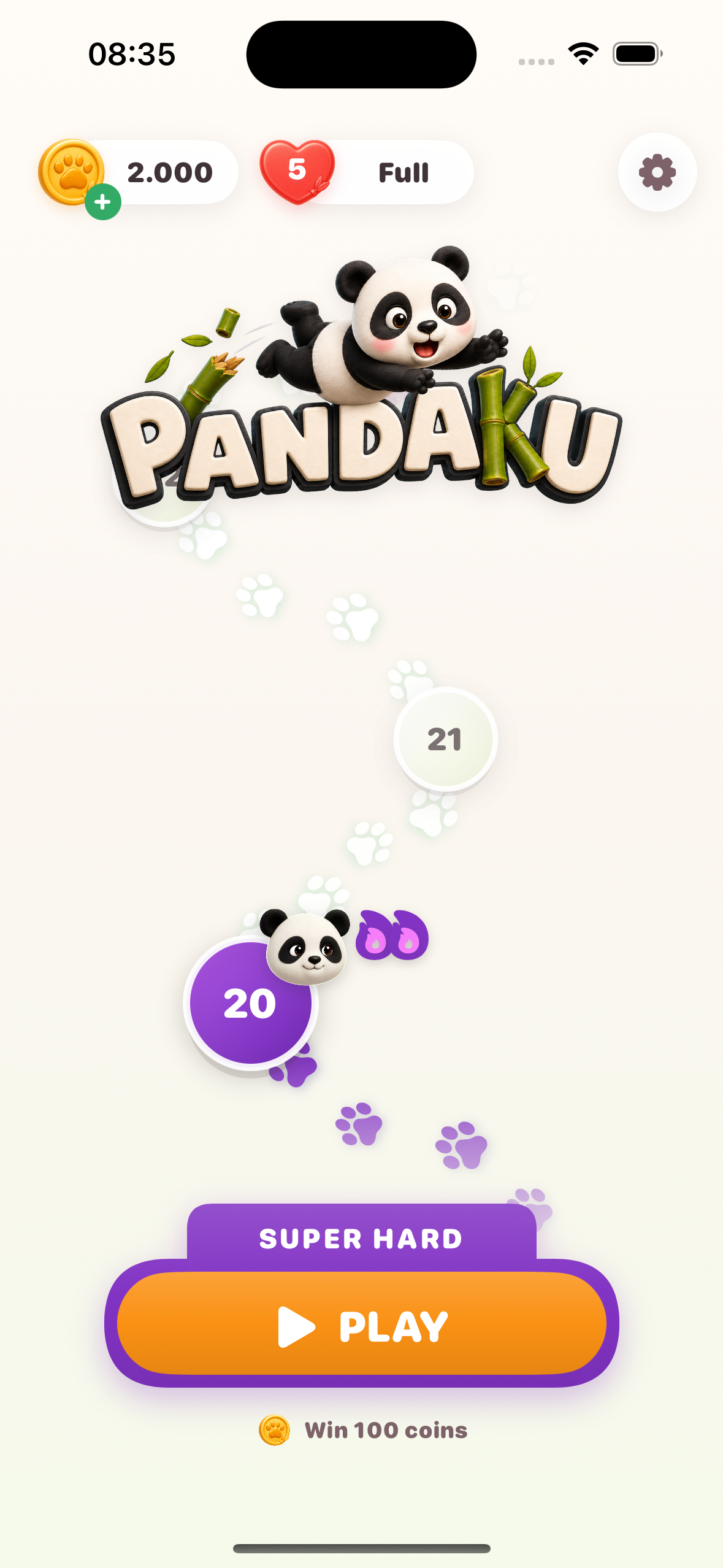
Can a difficult puzzle still feel calm?
Yes. Difficulty and stress are separate design variables. A fair hard puzzle gives you enough information to continue, clearly explains a rejected move, and preserves your place while you think. Pandaku’s generated boards are validated for a deterministic solution rather than accepting any arrangement that happens to obey the visible rules.
Hard and Super Hard labels set an expectation before the board begins. The visual accent and adaptive music can raise energy without changing the fundamental controls.

Why do sound and haptics matter?
Touch feedback closes the gap between a flat screen and a physical puzzle. A soft brush sound supports quick X marking; a layered placement cue and haptic response confirm a panda. Music, sound effects, and haptics can be controlled separately in Settings.
Feedback remains brief so repeated gestures do not stack into noise. During a win, the gameplay music steps back to make room for the celebration sequence.
What keeps the boards from feeling random?
A single intended solution creates trust. When the puzzle resists, you can search for a missed deduction rather than wonder whether the board is ambiguous. That relationship is especially important in a game that uses limited mistakes and optional hints.
The level system continuously generates new puzzles and validates each playable board without changing the core rules.
A practical solving loop
- 1
Learn the four rules through the interactive tutorial.
- 2
Use deliberate X marks so the board records your reasoning.
- 3
Let sound, haptics, and animation confirm actions without rushing the solve.
- 4
Move into Hard and Super Hard milestones when longer deduction chains feel inviting.